App Development: Mobile Products Built Around Real Business Scenarios
Not every business needs an app. We first assess whether users will genuinely come back to it, then decide between native, cross-platform or a Mini Program—so every dollar goes toward a real use case.
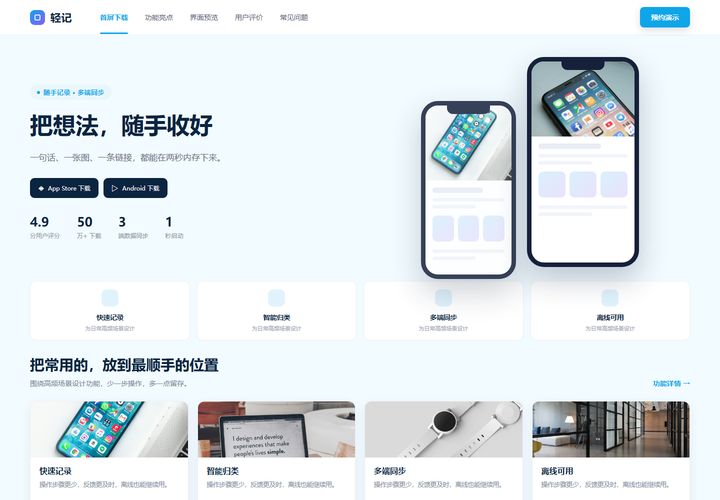
Four Key Details That Shape the Experience
Use Cases First
We validate the need with user journeys and a core task list before discussing the tech stack.
One Backend, Multiple Platforms
Your app, Mini Program and website share content and user systems to avoid duplicate work.
Iterative Architecture
A modular design that launches the MVP core first and iterates based on real data.
App Store Launch Support
We help prepare assets, privacy compliance statements and submissions to app stores.
Combine Modules to Fit Your Business Needs
The following are typical deliverables; the actual scope is subject to the written list confirmed after requirements are finalized.
Cross-Platform App Development
One main codebase for both iOS and Android—shorter timelines and lower maintenance costs.
WeChat Mini Programs
Ideal for low-frequency needs and social sharing, with the option to connect to your website content.
E-Commerce & Transactions
Products, orders, payments, coupons and membership systems.
Content & Community
Feeds, favorites, comments, push notifications and content moderation.
Internal Business Tools
Mobile-enable workflows such as approvals, work orders, store visits and reporting.
Admin Panel & APIs
Dashboards, role-based permissions, API documentation and version management.
Every Step Has a Deliverable You Can Confirm
Scenario & MVP Definition
Map core user tasks and define the must-have features for version one.
Prototyping & Interaction
Validate flows with clickable prototypes while finalizing APIs and the data model.
Development & Integration
Development for both platforms, backend API integration, real-device testing and performance tuning.
Launch & Iteration
App store submission, staged rollout, analytics instrumentation and release planning.
Feature-Scope Pricing
An MVP and a full product differ significantly in scope. We recommend validating with a minimum viable version first, then deciding on further investment based on real data.
We don't promise the 'lowest price on the web,' but we do provide an itemized quote covering the number of pages, revision rounds, and any modules billed separately.
What's Typically Included
- Requirements and prototype documentation
- UI design
- Development for both iOS and Android
- Admin panel
- Testing and bug fixes
- App store submission assistance
openly discuss uncertain areas
For More Questions, See: All FAQs or Inquire Now。
Should I choose an app or a WeChat Mini Program?
High-frequency services that need push notifications and device capabilities (camera, GPS, Bluetooth) are better suited to an app. Low-frequency services that rely on WeChat sharing and offline QR scanning work better as a Mini Program. You can also validate with a Mini Program first, then migrate to an app.
What's the difference between native and cross-platform development?
Native apps offer fuller performance and access to system capabilities, but cost more to build and maintain. Cross-platform uses one codebase for both platforms and ships faster. For most display, transaction and content businesses, a cross-platform approach is more than enough.
Who owns the source code after development?
The contract assigns ownership to the client. Delivery includes source code, API documentation, deployment instructions and admin accounts, so any team can take over maintenance.
What's needed to publish an app?
Typically you'll need a software copyright certificate or relevant credentials, a privacy policy and permission descriptions, app screenshots and description, plus test accounts. We'll provide a checklist and help prepare the submission materials.
Get StartedApp Development?
Tell us your goalandEstimated Budget,1 working days to provide site structure recommendationsandWritten quotation details。