Let Every Idea
HaveA Great Website
From brand websites to business systems, we use design and technology to bring your business online — and make it seen.
From information architecture and visual design to launch and indexing, our process builds 'being seen' into every step.
Four Business Types, One Site Built to Grow With You
Whatever your stage or budget, there's a right starting point. Every plan includes responsive design, a content management backend, and essential SEO setup.
Website Development
Communicate your business clearly, and turn visits into real conversions
We define the site structure and conversion paths before visual design, so you don't have to rebuild after launch.One codebase for desktop, tablet and mobile—mobile is thoughtfully re-laid out, not just shrunk down.
Learn MoreServicesApp Development
Put your high-frequency services right in users' pockets
We validate the need with user journeys and a core task list before discussing the tech stack.Your app, Mini Program and website share content and user systems to avoid duplicate work.
Learn MoreServicesEnterprise Website Development
Build trust with customers in just 8 seconds
Credentials, case studies, team, process and contact details are visible right above the fold.Every page has a clear next step to reduce bounce rates.
Learn MoreServicesSoftware Development
Let systems handle your repetitive workflows
We produce flowcharts and prototypes during discovery, aligning on definitions, edge cases and permission boundaries up front to reduce rework.Customers, orders, inventory and finances in a single source of truth—no more manually stitched-together reports.
Learn MoreServicesSee How Each One Looks Once It's Live
The thumbnails below are real rendered screenshots of the full pages — navigation, copy, images, and sections are all shown as they appear in the finished site, and you can zoom in. Brand colors, content, and sections are all replaceable.
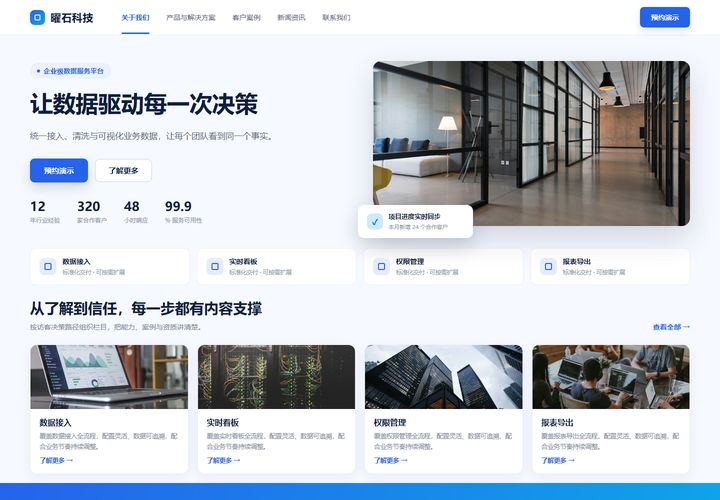
Obsidian Corporate Blue
Technology / Software / IT · Modern Business
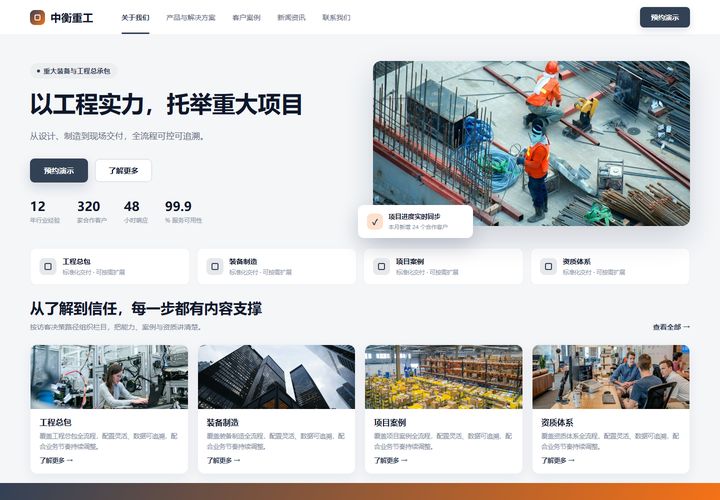
Heavy Industry Group
Engineering / Energy / Equipment Manufacturing · Solid Industrial
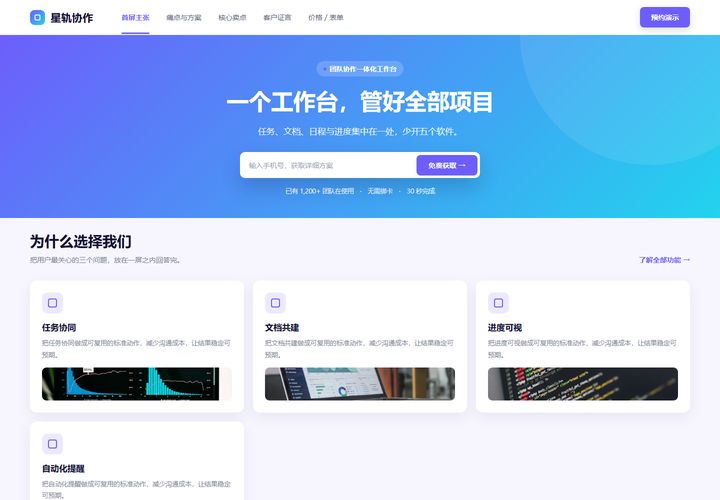
Startrail SaaS
Software / SaaS / Collaboration Tools · Gradient Tech
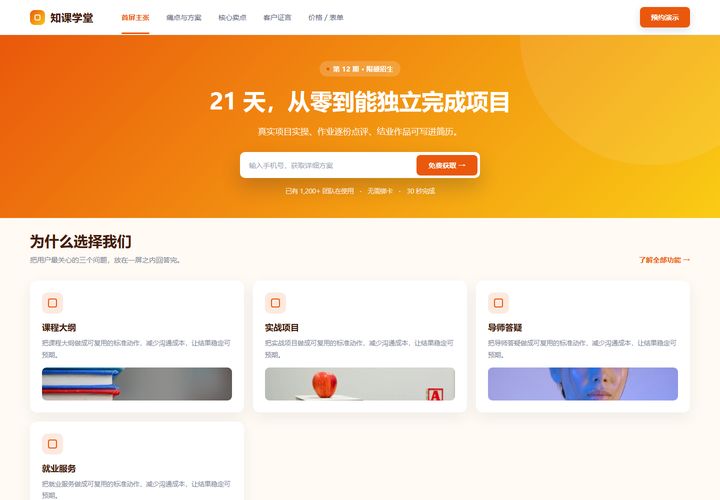
Zhike Education
Vocational Training / Courses / Paid Knowledge · High-Conversion Orange
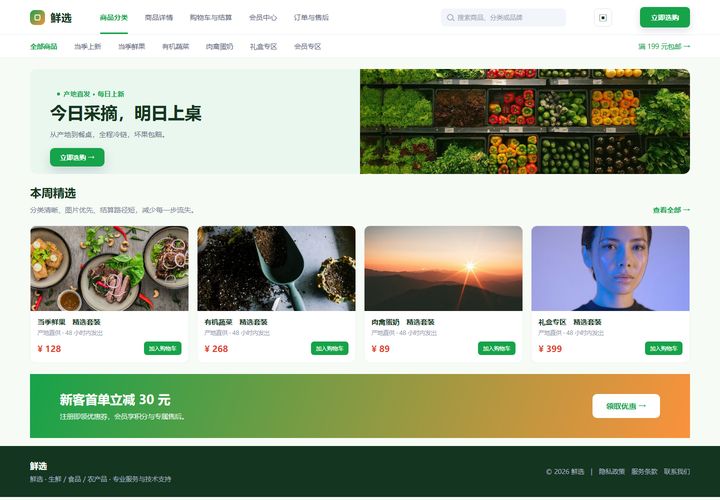
FreshPick Mall
Fresh Food / Food / Agricultural Products · Fresh Green
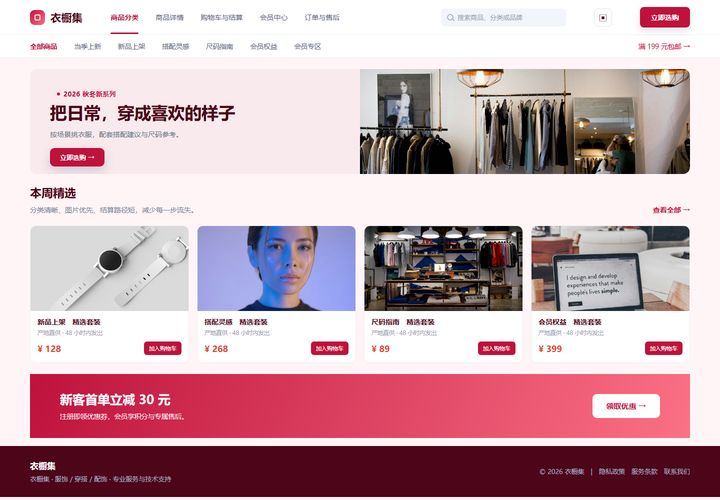
Wardrobe Hub
Apparel / Fashion Styling / Accessories · Editorial
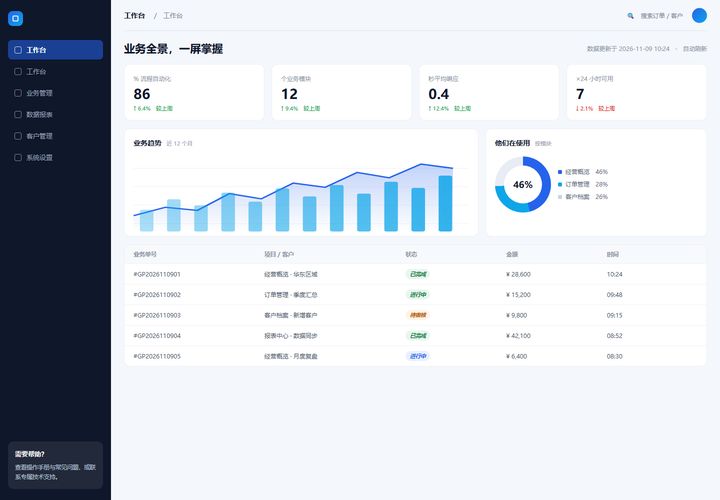
CloudHub Admin Console
Enterprise Management / SaaS Platform · Professional Admin
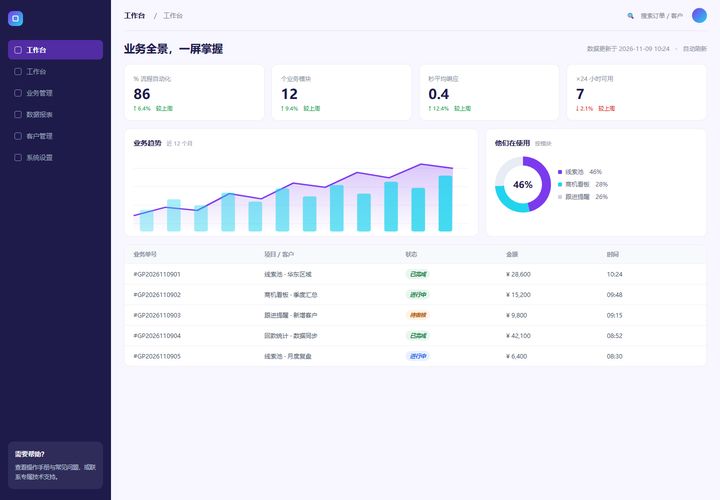
Customer Hub CRM
Sales Management / Customer Service · Data-Intensive
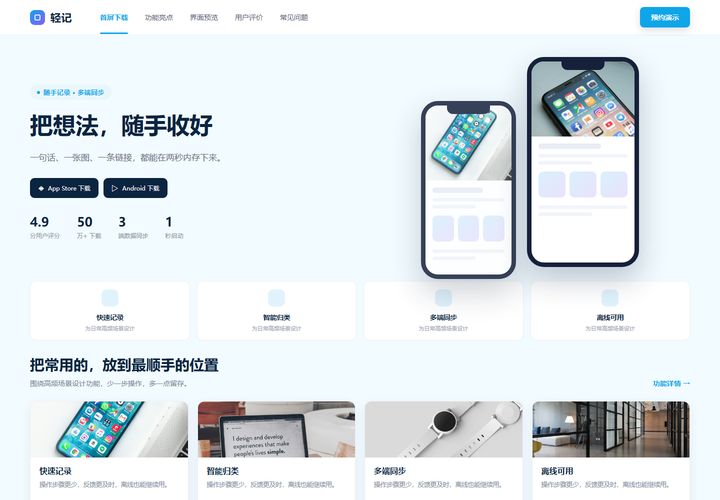
Lite App Showcase
Utilities / Productivity / Note-taking · Bright Gradient
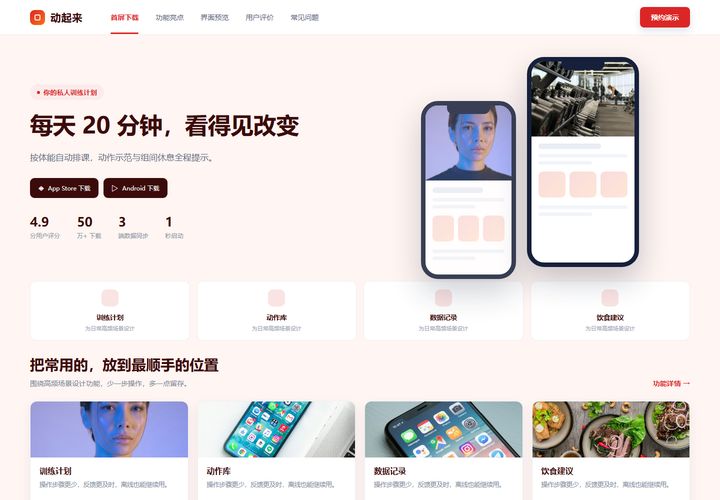
Get Moving
Fitness / Sports & Health · Sporty Black & Red
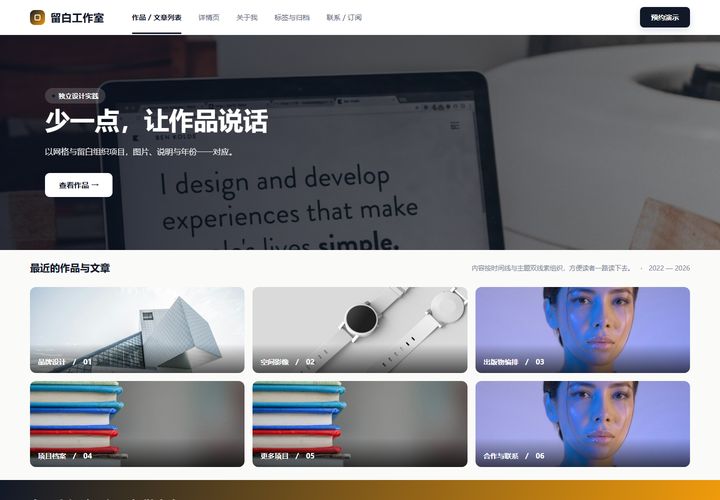
Whitespace Studio
Design / Photography / Creative · Minimal Whitespace
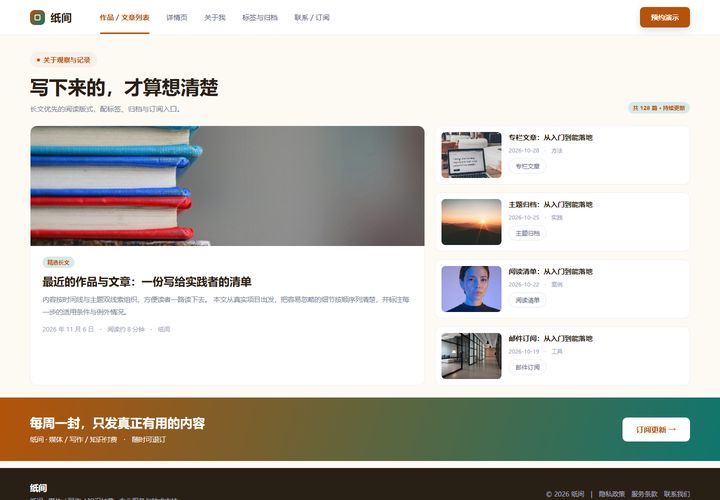
Between Pages Blog
Media / Writing / Paid Content · Editorial Print
More Than Good Looks — Built to Be Found and Cited
Search engine indexing and AI search citations depend on structure, not luck. These capabilities are built into the code from the start.
Semantic HTML Structure
Clear header / nav / main / article / section hierarchy, a single H1, and content that reads the same to machines and humans.
Individual TDK and Internal Linking Network
Each page has its own title, description, canonical tag, and breadcrumbs; sections, templates, and articles are cross-linked, with a click depth of no more than three levels.
Structured Data & Sitemap
Organization, Service, Article, FAQPage, and BreadcrumbList markup, with sitemap.xml, RSS, and llms.txt generated automatically.
GEO-Friendly (Generative Engine Optimization)
Q&A-style FAQs, factual lists, service processes, and comparison tables make content snippets citable by AI search even out of context.
Four Steps to Launch, With Clear Deliverables at Every Stage
Requirements review, design sign-off, development acceptance, and post-launch support — the process is viewable at any time on a staging domain.
Requirements Discussion
We clarify your business goals, target audience, and site structure (or workflow and data definitions), then deliver a requirements list and sitemap/flowchart, with a proposal within one business day.
Prototyping & Design
We start with clickable page prototypes before visual design; each round offers two directions to choose from, and development begins only after your approval.
Development & Configuration
Responsive front-end development, integration of the CMS or business modules, basic SEO setup, forms and analytics tracking — with progress visible throughout on a staging domain.
Launch & Ongoing Support
DNS configuration, filing assistance, HTTPS setup, search engine submission, and sitemap pinging; after delivery, we provide training and content-update support.
Different Industries, Equally Clear Conversion Paths
Below are anonymized project summaries focusing on what problems were solved, not just on good-looking pages.
Brand Website Redesign for a Technology Group
Restructured the site navigation and content hierarchy, consolidated five business lines into three solution entry points, and completed the case studies and credentials sections.
View Case StudiesChain Retail Membership Mini Program
Integrated loyalty points, store locator, coupons, and event registration, sharing product data with the official website CMS.
View Case StudiesSaaS Product Website & Help Center
Unified the product site, pricing page, help docs, and lead forms into one platform, with content and leads flowing into a single backend.
View Case StudiesWe Put Our Experience in Writing and Leave the Choice to You
Verifiable content on the web building process, pricing structure, app selection, and SEO / GEO optimization.
What Pages Does a Business Website Need? A Complete Page Checklist from Scratch
The thing most often overlooked when building a business website isn't design, but the page list. Following the visitor's decision path, this article lists the essential and optional pages, explaining each page's goal, core content, and common pitfalls, so you can define the scope clearly before you start.
Read Full ArticleThe Full Process of Building an Enterprise Website: 7 Steps from Requirements to Official Launch
This article breaks enterprise website development into 7 deliverable stages, explaining the output of each step and the common causes of rework, to help your project avoid unnecessary detours.
Read Full ArticleHow Much Does Building a Website Cost? Quote Breakdown and Common Add-ons Explained
There's no standard price for building a website, but the cost structure is transparent. This article breaks down five cost categories—design, development, content, third-party services, and maintenance—and lists add-ons that are easily overlooked.
Read Full ArticleLet's Clear Up the Key Questions Before We Begin
If you don't see what you're looking for, feel free to contact us directly.
Phone 400-000-0000 · Leave a Message →
What services do you provide?
Kunming Guangpai Culture Media Co., Ltd. offers four core services: website development (custom sites and marketing landing pages), corporate website building (brand sites, group portals, multilingual sites), app development (iOS/Android, Mini Programs, admin dashboards), and software development (CRM/ERP/OA, SaaS platforms, data dashboards, and API integration). All four can include a content management backend, SEO configuration, and launch support.
How long does it take to launch a website project?
A standard informational website usually takes 15–25 business days; projects with a CMS, multiple content sections, or custom interactions typically take 30–45 business days. A template-based fast-launch package usually takes a few days to two weeks. The actual timeline depends on how quickly requirements are confirmed, assets are prepared, and feedback is provided.
Can I use a website template as-is? Can it be customized?
Yes. All templates shown here can be customized — swap in your brand colors, fonts, images, and section content, and add pages or features as needed. They use responsive layouts and semantic HTML, so there's still room for SEO optimization after launch.
Can I update articles and case studies myself after delivery?
Yes. The admin panel provides visual management for articles, templates, case studies, services, and site settings. Saving changes automatically rebuilds the static pages and updates sitemap.xml, RSS, and the site summary — no coding required.
Is the finished website friendly to Baidu, Google, and AI search indexing?
The site is built for indexing from the ground up: per-page TDK, canonical tags, semantic markup, breadcrumbs, JSON-LD structured data, sitemap.xml, robots.txt, RSS, and llms.txt. We also include FAQs and factual summaries to help generative engines cite your content. Indexing time and rankings are determined by each platform's algorithms, so we make no guarantees.
Who is responsible for the domain, hosting, and filing?
We recommend that clients register and own the domain and hosting accounts themselves; we provide selection advice, DNS configuration, and filing assistance. Third-party fees are paid by the client based on actual invoices, so account and data ownership stays clear.
Should I choose an app or a Mini Program?
Apps suit high-frequency use cases that need push notifications or device features; Mini Programs suit low-frequency but essential scenarios that rely on WeChat sharing and offline QR codes. Both can share one content backend, or you can validate demand with a Mini Program first and then expand to an app.
Who owns the source code and data? Can I switch providers later?
Upon delivery, the source code, design files, and content data belong to the client, along with API and deployment documentation. The site uses standard static HTML output and can be deployed to any web host or CDN — no platform lock-in.
What's the smallest scope we can start with for software development?
We suggest starting phase one with 2–3 core modules — for example, 'customer profiles + orders + reports' — which can be live for a trial in 4–8 weeks. Once things run smoothly, you can expand as needed. This is safer and easier to budget than building a full system all at once.
Are the images in the website templates real mockups? Can I use them directly?
The template previews are actual screenshots of fully rendered pages — sections, copy, colors, and image placements are all shown as they appear in the finished site, so you can see exactly how it will look after launch. The industry photos in the screenshots come from free, commercially licensed stock libraries and are for layout demonstration only; in a real project they're replaced with your own or properly licensed assets.
Will my site look the same as other clients using the same template?
A template is only a starting point. Brand colors, fonts, hero images, section structure, copy, and functional modules are all rebuilt around your materials, so the finished sites differ significantly. If you need stronger differentiation, you can opt for custom design — we'll compare templates vs. custom during the requirements phase.
Can I add a business system after the website is live?
Yes. The website stays static for better indexing, while the business system is deployed separately on a subdomain, with leads fed in via forms or APIs. Both share the same design guidelines and domain structure, so the experience is consistent while the architectures remain independent.
Can I change the section structure shown on a template's detail page?
Yes. The sections listed for each template are just a recommended structure. In a real project we add or remove pages, adjust ordering and navigation hierarchy to fit your business, and you can keep updating articles, case studies, and template info in the admin panel.
Who maintains the website and system after launch?
Delivery includes source code, deployment documentation, and admin training, so you can maintain it yourself. You can also opt for our ongoing service covering content updates, security patches, backup monitoring, and feature enhancements. Both options are supported, and your data is never locked into a platform.
Are you based in Kunming? Can we meet in person?
Our legal entity is Kunming Guangpai Culture Media Co., Ltd., and our services are based in Kunming, Yunnan. Local clients can schedule in-person requirements reviews, design critiques, and on-site acceptance; remote clients collaborate via video calls, online documents, and project groups — with the same delivery standards as local projects.
What's the difference between hiring a local Kunming team and an out-of-town one?
The main differences are communication and assets: when you need to photograph local stores, factories, or staff, a local team can more easily arrange on-site shoots and settle direction in person during reviews; we're also more familiar with local search terms and industry phrasing in Kunming and Yunnan. If your assets are ready and the project is a standard informational site, an out-of-town team can deliver just as well — the key is whether the sitemap, deliverables list, and source-code ownership are clearly specified.
take your next project,Leave it to us
clearly communicate business goals,We are in 1 working days to provide site structure recommendationsandWritten quotation details。